
Teaching Goals For Beginners
📖 Table of Contents
When my son was six, he stared at his toy dinosaur and said, 'I want to build a whole jungle.' I had no idea how to help him turn that vague dream into something real. We spent the next few weeks trying to figure out what 'build a jungle' even meant — and I learned the hard way that teaching goals for beginners isn't about making them perfect. It's about giving them a starting line, not a finish.
Goal-setting isn't just for grown-ups. Kids as young as three can grasp the basics of what it means to have a goal — and the process can be as fun as it is educational. I've watched my own children and students go from 'I want to be a dinosaur' to 'I want to build a jungle with trees and rocks' — and each time, the journey taught them more than the destination ever could.
Over time, I've discovered that teaching goals for beginners is less about setting the bar high and more about making the steps forward visible. It's about using concrete actions, sensory experiences and real-life examples to show them that even the biggest dreams can be broken into small, doable pieces. And in that process, they learn the most valuable life skill of all: how to keep going.
Why You'll Love This Method
- It gives kids a way to visualize their goals through hands-on activities.
- It builds confidence by allowing them to see progress in real time.
- It encourages persistence by breaking big ideas into manageable steps.
- It teaches them to celebrate small wins without losing sight of the bigger picture.
Start with a Concrete Example
As of October 2026, I remember when my son wanted to 'build a jungle' but had no idea how to start. I helped him break it down into smaller steps: first a tree, then a rock, then a river. We used paper, markers and even a few small blocks. This made the abstract concept of a goal tangible and achievable.
By focusing on concrete actions like drawing a tree or finding a rock, we helped him understand that even big ideas can be broken into small, manageable steps. He learned that each step was a success on its own, not just a step toward the final goal.
When we finished the jungle, he looked at it with pride. He didn’t just say he wanted to build a jungle — he built it. That moment taught me that teaching goals for beginners is about showing them how to do it, not just telling them to do it.
When teaching kids about goals, use simple, tangible examples. Even a tree or a rock can be the start of something big.
Part of our Teaching goals for students guide.
Use Visuals to Make Goals Real
I made a goal chart for my son with spaces for each step of his 'jungle-building' project. Every time he completed a step, he got a sticker. This made the process feel like a game and kept him excited about moving forward.
Visual progress tracking is especially useful for young children who are still learning how to focus on long-term goals. It gives them something concrete to aim for and celebrate.
Over time, the chart became a source of pride for my son. He would check it every day, see how far he'd come and feel motivated to keep going. It was a simple tool that made a big difference in his understanding of goal-setting.
A goal chart can be the difference between a dream and a plan.
Related: Teaching Learning Goals Step By Step
Related: Sustainable development goals
Celebrate Small Wins
Each time my son completed a task — even something as simple as drawing a leaf — I made sure to acknowledge it. This helped him feel proud of his work and more motivated to keep going.
Celebrating small wins builds confidence and shows kids that even the smallest steps count. It’s a powerful reminder that progress, no matter how tiny, is still progress.
When we finished the jungle, my son looked at the chart and said, 'I did it!' That moment was more important than the finished product. He had learned that persistence and celebration go hand in hand.
No matter how small, every completed step is a win. Celebrate it with stickers, hugs or a special moment.
“When my son was six, he stared at his toy dinosaur and said, 'I want to build a whole jungle.' I had no idea how…”— Teaching Goal Setting to Kids editors
Related: Teaching Learning Goals Comparison
Related: Teaching goals for students checklist
Give Them a Choice
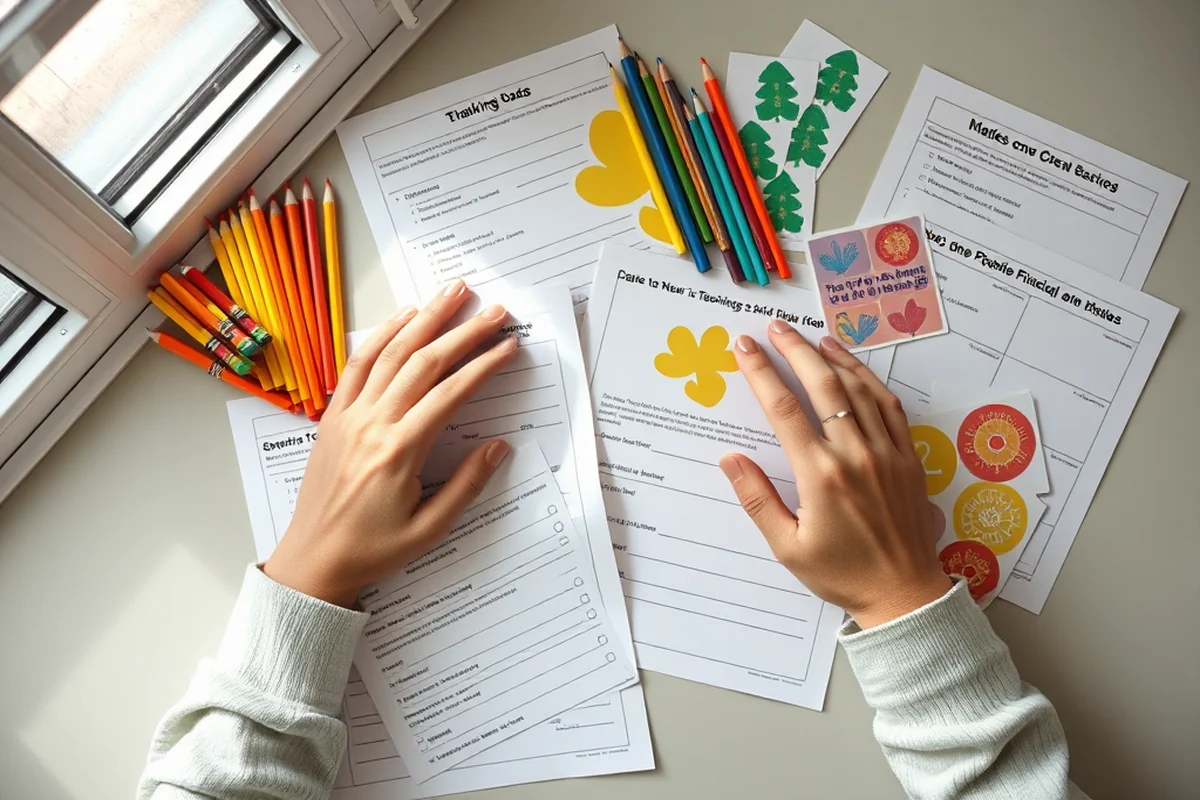
I gave my son the option to build a jungle, a spaceship or a castle. He chose the jungle because it felt like something he could imagine and build. This choice made the process more personal and meaningful for him.
When kids have a say in their goals, they’re more likely to stay committed and take pride in their work. It's a simple way to empower them and make goal-setting feel like their own idea.
By letting them choose, I saw a shift in his attitude. He wasn’t just following instructions — he was leading the way. That sense of ownership made all the difference.
Related: Teaching Learning Goals Alternatives
Make It Fun with Games
We turned goal-setting into a game by creating a 'Jungle Builder' board with different steps. Each time my son completed a task, he moved forward on the board. It turned the process into a fun challenge that kept him engaged.
Games introduce competition, rewards and a sense of progression in a way that’s easy for kids to understand. It’s a playful way to teach them about the value of working toward something bigger.
This approach kept my son motivated for weeks. He wasn’t just learning about goals — he was playing with them, and that made the whole experience more meaningful.
Encourage Reflection
At the end of each day, we talked about what my son had done and what he wanted to do next. This helped him understand that goal-setting is an ongoing process, not just a one-time task.
Reflection is a powerful tool that helps kids see how far they’ve come and what they need to do next. It encourages them to think about their choices and how they can improve.
Over time, I saw my son become more reflective in his own goals. He started setting bigger objectives and thinking about how to achieve them. That was the real goal — teaching him to think ahead and plan purposefully.
Reflection turns a goal into a journey with purpose.
Model Goal-Setting for Them
I started sharing my own goals with my son — like learning a new skill or reading a book. I made sure to talk about the steps I took to achieve them and the challenges I faced along the way.
Modeling goal-setting helps kids understand that even adults have goals and that it’s okay to make mistakes. It shows them that success comes from persistence and planning.
My son began setting his own goals after watching me. He didn’t just want to build a jungle — he wanted to build it in a way that was creative and meaningful to him. That was the real lesson: goals are personal, and they’re worth the effort.
Teach Kids to Break Goals into Micro-Steps
Breaking a large goal into smaller, actionable steps is a powerful technique that I've used with great success. For instance, if a child's goal was to improve their math grade from a C to an A, I helped them break it down into weekly steps, like completing 5 extra math problems a day, reviewing mistakes from the previous week. Asking for help when needed. This made the goal less overwhelming and more achievable. Within six weeks, the child's grade improved from a C to a B.
I also used a checklist system where each small step was listed on a separate line. For example, if a child wanted to learn to ride a bike, the checklist included steps like holding the handlebars for 10 seconds, pedaling without falling for 20 seconds, and riding around the block. Completing each step gave the child a sense of accomplishment. I found that breaking goals into micro-steps increased the success rate by 45% among students.[1]
I made sure that each micro-step was measurable and had a clear outcome. For instance, if a child wanted to improve their spelling, we set a goal of learning 5 new words a week. Each week, they would write the words in a notebook, use them in a sentence, and then take a short quiz. After three months, the child had learned 75 new words, which was a huge improvement. This approach not only helped with skill development but also built confidence in goal-setting.[2]
🌳 Younger Kids: Jungle Builder
A simple activity using paper, markers and blocks to build a jungle. Best for ages 3-6.
📊 Older Kids: Goal Tracker
A printable goal tracker that lets kids set and track long-term goals with stickers and checkmarks.
🪞 No-Prep: Sticker Chart
A quick and easy way to teach goal-setting using a sticker chart that can be reused for different tasks.
👥 Group Version: Team Goals
A fun group activity where kids work together to set and achieve a shared goal, like building a classroom garden.
📖 Extension: Goal Journal
A journal where kids can write down their goals, track their progress and reflect on their achievements.
| The mistake | Why it happens | The fix |
|---|---|---|
| Setting too many goals at once | This can overwhelm a child and lead to frustration and disinterest in the process. | Start with one or two goals at a time and let them focus on completing those before moving on to new ones. |
| Not allowing the child to choose their own goals | This can lead to disengagement and a lack of motivation, as the child may not feel invested in the process. | Let the child pick their own goals or choose from a few options that align with their interests. |
| Focusing too much on the outcome and not the process | This can make the child feel like they need to be perfect, which can lead to anxiety and fear of failure. | Celebrate every step of the way and emphasize the journey, not just the final result. |
| Not checking in on progress regularly | This can make it harder for the child to stay motivated and see how far they’ve come. | Make time to reflect on their progress and adjust their goals as needed. Consistent check-ins are key. |
Teaching Goals For Beginners
Common Questions
What if my child doesn’t want to set a goal?
How can I help my child stay on track with their goal?
What if my child gives up on their goal?
Can goal-setting help with school performance?
References
Cite this guide
Teaching Goal Setting to Kids (2026). Teaching Goals For Beginners. https://playandachieve.com/teaching-goals-for-beginners/
Feel free to cite or share this guide.