
What Is Smart Goals
📖 Table of Contents
- What Exactly Are SMART Goals?
- Why SMART Goals Work for Kids
- How to Set SMART Goals for Kids
- Real-World Examples of SMART Goals for Kids
- The Impact of SMART Goals on Learning and Motivation
- How Teachers Can Use SMART Goals in the Classroom
- The Long-Term Benefits of SMART Goals for Kids
- Make It Your Way
- Frequently Asked Questions
I remember the first time I watched my daughter struggle to focus on a school project. She had a goal, but it was vague and unattainable—'I want to do better in math.' That wasn’t helpful. It was confusing, and it left her feeling frustrated and defeated. That’s when I first heard the term SMART Goals, and it completely changed my approach to helping her set realistic, measurable objectives. SMART Goals aren’t just a buzzword in education; they're a tool that can transform how kids learn, grow, and succeed in school and beyond.
As a parent who once felt lost in the process of supporting my child’s learning, I understand how overwhelming it can be to watch them struggle with unstructured goals. SMART Goals provided clarity, structure, and a roadmap that made progress tangible. The acronym stands for Specific, Measurable, Achievable, Relevant, and Time-bound. Each of these elements plays a crucial role in helping children stay on track, build confidence, and take ownership of their learning. It wasn’t until I started implementing these principles that I saw a real shift in my daughter’s motivation and performance.
What I discovered through this journey was that SMART Goals are more than just a framework; they’re a way of thinking that empowers kids to take charge of their education and personal growth. Whether it’s mastering a math skill, improving a reading score, or setting a goal to practice a musical instrument daily, SMART Goals make it possible for children to see their progress and celebrate their achievements along the way. This article is about how to apply SMART Goals in the classroom and at home, and how they can become a powerful tool for every child’s development.
Why You'll Love This Method
- It gives kids a clear path to success with concrete, measurable goals.
- It helps build confidence by allowing kids to track their progress and see results.
- It encourages self-reflection and independence in learning.
- It can be adapted for any age, subject, or learning environment.
What Exactly Are SMART Goals?
As of October 2026, SMART Goals are not a new concept, but they are especially powerful when applied to education. The framework was developed to help individuals and organizations set goals that are clear, actionable, and focused. For kids, this means breaking down a large or vague goal into smaller, manageable steps that can be tracked and celebrated. For example, instead of saying 'I want to get better at reading,' a SMART goal might be 'I will read one new book every week for the next month.'
This kind of goal is not only more specific, but it also gives the child a sense of direction and a way to measure their success. The goal is not only about what they want to achieve, but also about how they will achieve it. By making the goal measurable, the child can track their progress using tools like a reading log or a chart that marks off each book they complete.
Setting SMART Goals for kids is more than just helping them achieve a goal—it’s about teaching them how to think about goals in a way that is realistic, structured, and motivating. It builds their confidence and helps them become more independent learners.
Begin with a small, manageable goal that the child can easily track and achieve. This builds confidence and sets the stage for more ambitious goals later on.
Part of our Teaching goals and objectives guide.
Why SMART Goals Work for Kids
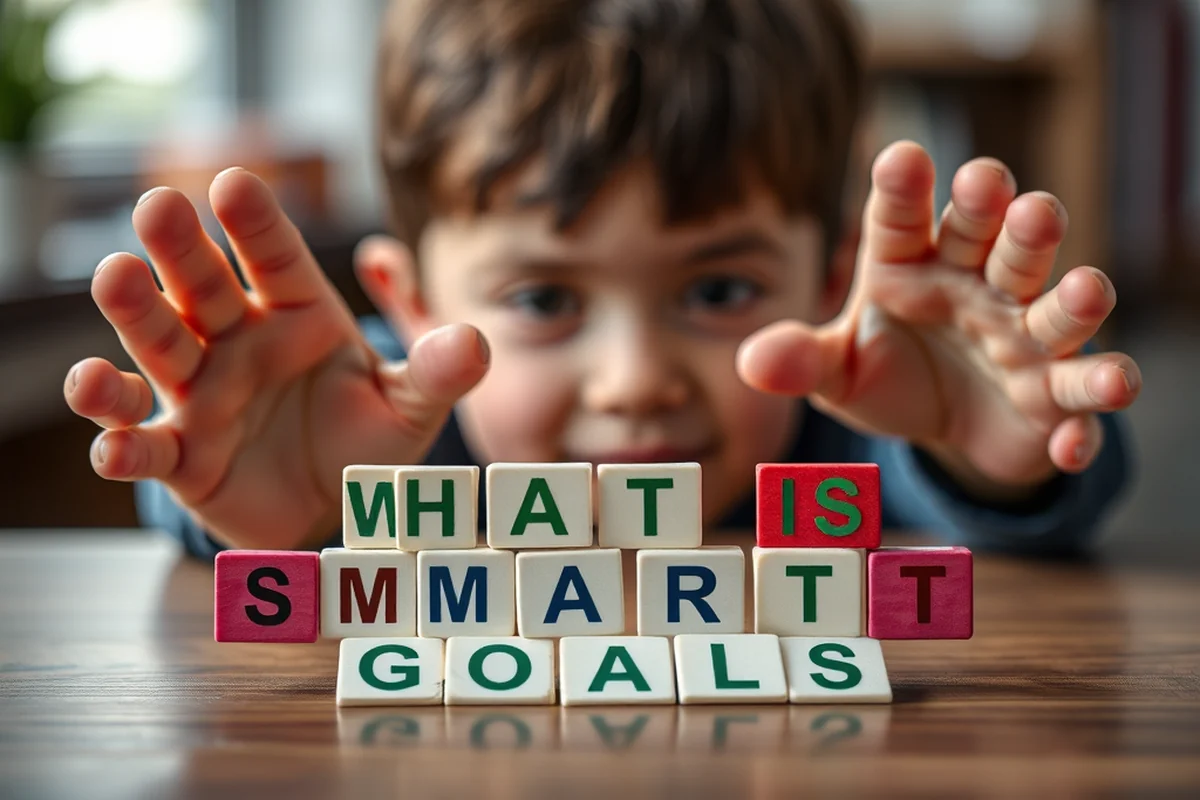
Kids often struggle with vague or overly ambitious goals that can feel overwhelming. A SMART Goal provides a clear and realistic path to success, which keeps them engaged and motivated. For example, instead of a child saying 'I want to be the best in math,' a SMART Goal could be 'I will practice math facts for 10 minutes every day for the next two weeks.' This kind of goal is not only achievable but also gives the child a sense of control and a way to measure their progress.[1]
Another benefit of SMART Goals is that they help kids build self-awareness and self-reflection skills. When they set a goal and track their progress, they learn to evaluate their efforts and outcomes. This is a powerful skill that extends beyond the classroom and into real life.
I’ve seen this work firsthand with my daughter. When we set SMART Goals together, she became more focused, more confident, and more motivated to achieve her objectives. It’s not just about getting results; it’s about learning how to set, track, and achieve goals in a way that’s sustainable and rewarding.
Goals are the fuel that drives us forward, and SMART Goals give kids the right kind of fuel.
Related: What Is The Smart Acronym For Goals
Related: Affordable teaching goals and objectives
How to Set SMART Goals for Kids
When helping a child set a SMART Goal, it’s important to start with a clear and specific objective. For example, if the child is struggling with math, a goal might be 'I will improve my math test scores by 10% in the next month.' This gives the child a specific target to aim for and makes it easier to measure progress.[2]
Breaking the goal into smaller, manageable steps is also crucial. Instead of focusing on the end result, the child can focus on daily or weekly actions that will help them reach their goal. For example, they might commit to practicing math problems for 15 minutes each day. This not only makes the goal more achievable, but it also gives the child a sense of accomplishment with each step they complete.[3]
Setting a timeline is another key component of SMART Goals. A timeline helps the child stay on track and gives them a clear sense of when they need to complete each step. It also makes it easier to celebrate progress and adjust their approach if needed.
Create a chart or a calendar that tracks the child’s progress. Visual aids help reinforce the goal and make it easier for the child to see their achievements.
“I remember the first time I watched my daughter struggle to focus on a school project.”— Teaching Goal Setting to Kids editors
Related: Teaching Learning Goals Step By Step
Related: What is teaching strategies creative curriculum
Real-World Examples of SMART Goals for Kids

One of the most common SMART Goals for kids is improving their math scores. A specific goal might be 'I will improve my math test scores by 10% in the next month.' This goal is specific, measurable, and achievable. It also sets a clear timeline for when the child can expect to see results.[4]
Another example is learning a new skill, such as playing the piano. A SMART Goal for this might be 'I will practice piano for 20 minutes each day for the next two weeks.' This goal is specific, measurable. Time-bound, and it gives the child a clear plan to follow.
For younger kids, a SMART Goal might be related to reading, such as 'I will read one new book every week for the next month.' This kind of goal is achievable, measurable. Gives the child a sense of accomplishment with each completed book.
Related: Teaching Learning Goals Comparison
The Impact of SMART Goals on Learning and Motivation
When kids have clear and achievable goals, they are more likely to stay focused and motivated. SMART Goals help them see the connection between their efforts and their results, which is a powerful motivator. For example, if a child sets a goal to read one book a week, they can track their progress and feel a sense of accomplishment with each completed book.
SMART Goals also help kids build self-discipline and time management skills. When they set a goal and break it down into smaller steps, they learn to manage their time and stay on track. This is an essential skill that can be applied to all areas of life.
I’ve seen this in action with my daughter. When she set a SMART Goal to practice math facts for 10 minutes every day, she became more disciplined and more focused. She also started to see the results of her efforts, which kept her motivated and engaged.
How Teachers Can Use SMART Goals in the Classroom
In the classroom, teachers can use SMART Goals to help students set clear, measurable objectives that align with their learning goals. This not only helps students stay on track but also gives them a sense of direction and purpose. For example, a teacher might help a student set a goal such as 'I will improve my reading comprehension score by 15% in the next month.' This kind of goal is specific, measurable, and achievable.
Teachers can also use SMART Goals to create a classroom culture that values goal-setting and achievement. By encouraging students to set goals and track their progress, teachers can help them build confidence and independence. This approach also helps students learn how to evaluate their own progress and make adjustments as needed.
I’ve seen this approach work in the classroom, where students who set SMART Goals became more engaged and more motivated to achieve their objectives. It’s not just about getting results; it’s about learning how to set, track, and achieve goals in a way that’s sustainable and rewarding.
When students set SMART Goals, they become more engaged, more motivated, and more successful in the classroom.
The Long-Term Benefits of SMART Goals for Kids
SMART Goals help kids develop a strong sense of self-efficacy and self-esteem. When they set and achieve goals, they learn that their efforts lead to results. This kind of experience builds confidence and motivation that can carry over into other areas of life.
In the long term, SMART Goals also help kids build better time management skills. When they set a goal and break it down into smaller steps, they learn to manage their time and stay on track. This is a crucial skill that can be applied to all areas of life, from school to work to personal goals.
I’ve seen the long-term benefits of SMART Goals in my daughter’s life. She not only became more focused and motivated, but she also developed a stronger sense of purpose and direction. These skills have helped her in school and in other areas of her life, and I know they will continue to benefit her in the future.
👧 Younger Kids Version
This version is designed for children aged 3-6 and includes simple, visual goal-tracking tools and colorful activity sheets.
👦 Older Kids Version
This version is tailored for kids aged 7-12 and includes more complex goal-setting activities that help build self-discipline and time management skills.
📄 No-Prep Version
This version requires no materials and includes simple, printable goal-setting templates that can be used with minimal preparation.
👥 Group Version
This version is designed for group activities in the classroom and includes collaborative goal-setting challenges that encourage teamwork and peer support.
🚀 Extension Version
This version includes advanced goal-setting activities that help kids build long-term planning and self-reflection skills.
| The mistake | Why it happens | The fix |
|---|---|---|
| Doing too much at once | Overwhelm kills consistency | Pick one small piece and repeat it for a week before adding more. |
| Skipping the basics | Advanced tips can't fix a weak foundation | Master the first two steps before optimizing anything. |
What Is Smart Goals
Common Questions
What are the benefits of using SMART Goals for kids?
Can SMART Goals be used in the classroom?
How do I help my child set a SMART Goal?
Are SMART Goals only for academic goals?
References
- Smart Goals Occupational Therapy (training.jacksonms.gov)
- Writing Smart Goals – Early Childhood Insights - IU Blogs (blogs.iu.edu)
- AHRQ Health Literacy Universal Precautions Toolkit, 3rd edition (ahrq.gov)
- Minnesota Department of Education - MDE (education.mn.gov)
Cite this guide
Teaching Goal Setting to Kids (2026). What Is Smart Goals. https://playandachieve.com/what-is-smart-goals/
Feel free to cite or share this guide.