
Short Term Goals
📖 Table of Contents
- What Are Short Term Goals and Why Do They Matter?
- How to Set Effective Short Term Goals with Kids
- The Role of Parents in Supporting Short Term Goals
- The Benefits of Teaching Short Term Goals to Kids
- How to Track Progress Toward Short Term Goals
- Real-Life Examples of Short Term Goals for Kids
- Common Mistakes to Avoid When Teaching Short Term Goals
- Make It Your Way
- Frequently Asked Questions
I remember standing in my daughter’s classroom one afternoon, watching her sit at her desk, staring blankly at the whiteboard. Her teacher had asked the class to write down their goals for the next week, and while most kids had written things like 'practice piano' or 'read a book,' my daughter had nothing. I realized then that teaching kids about short term goals wasn't just about planning for the future—it was about building confidence, creating structure, and helping them take control of their learning and growth.[5]
Short term goals are the stepping stones that lead kids to bigger achievements. They are the small, manageable steps that help children see progress, stay motivated, and understand the power of setting and working toward objectives. I’ve seen how setting a goal like 'finish my homework in 30 minutes' or 'help a friend today' can transform a child’s sense of purpose and self-efficacy.[1]
Through trial and error, I've discovered that teaching short term goals is not just about setting targets—it's about helping kids recognize their strengths, build self-discipline, and feel the satisfaction of accomplishment. Whether it's mastering a spelling word, completing a math worksheet, or even sharing a toy, these small goals are the building blocks of lifelong learning and success.
Why You'll Love This Approach to Short Term Goals
- It helps kids build confidence through measurable achievements.
- It encourages consistent effort and self-discipline.
- It fosters a growth mindset by showing progress over time.
- It makes learning feel more tangible and rewarding.
What Are Short Term Goals and Why Do They Matter?
As of September 2026, Short term goals are the kind of objectives that can be completed in days or weeks, making them ideal for young learners. For instance, a goal like 'practice spelling words for 10 minutes every day' gives a child a clear, manageable task that they can complete and feel proud of. I've found that when kids see the results of their effort so quickly, it builds a strong foundation for future learning and self-motivation.[2]
Setting short term goals helps children develop a sense of purpose and direction. When I first started teaching my daughter to set goals, I noticed that she began to think more clearly about what she wanted to accomplish each day. It helped her stay focused, avoid procrastination, and understand that even small steps add up to big achievements over time.
In my experience, short term goals are especially effective for kids who struggle with long-term planning. A goal like 'clean my room by tomorrow' is much more tangible than 'be a better student by next year.' It gives them a clear target to work toward. Is essential for developing the habit of goal-setting.
Begin by identifying one small action your child can do immediately. For example, 'I will put away my toys today.' This makes the goal feel doable and less overwhelming.
Part of our Teaching goals and objectives guide.
How to Set Effective Short Term Goals with Kids
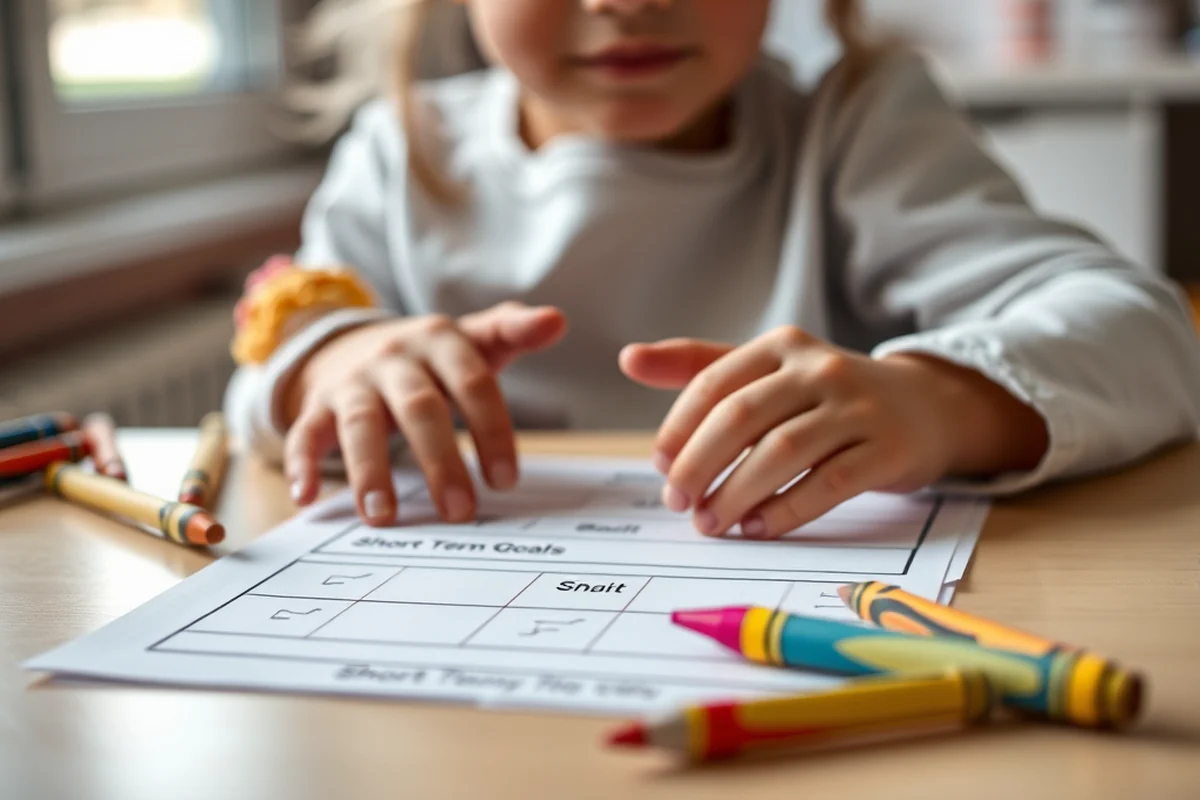
The key to setting effective short term goals is to involve your child in the process. I've found that when kids have a say in what they want to achieve, they are more likely to follow through. For example, if your child is struggling with math, a goal like 'solve five math problems today' gives them a clear, achievable target that's tailored to their needs.
Effective goals should be specific, measurable, and time-bound. Instead of saying 'I want to be better at reading,' a more effective goal would be 'I will read one chapter of my favorite book today.' This makes the goal concrete and gives your child a clear sense of what success looks like.
When setting goals with your child, it's also important to make sure they are achievable. If the goal is too difficult, it can lead to frustration and discouragement. I've seen this happen when I set a goal that was too ambitious for my daughter’s skill level. It taught me the importance of starting with small, manageable steps that build confidence over time.
Start small, start now, and watch your child grow.
Related: How to teaching goals and objectives
Related: What is teaching strategies creative curriculum
Related: Affordable teaching goals and objectives
Related: Cheap teaching goals and objectives
Related: Long Term Goals
The Role of Parents in Supporting Short Term Goals
As a parent, your support can make all the difference in helping your child achieve their goals. I've found that being present and encouraging is one of the most powerful ways to help your child succeed. For example, when my daughter set a goal to finish her homework in 30 minutes, I sat with her and helped her stay focused. This not only helped her complete the task but also gave her a sense of accomplishment.[3]
One of the most important things parents can do is to celebrate their child’s progress. Even small achievements like finishing a goal or completing a task should be acknowledged. I remember the first time my daughter completed a goal I set for her—she was so proud of herself, and it motivated her to set more goals in the future.
Support from parents also helps children develop resilience and perseverance. When your child faces challenges, your encouragement can help them push through and keep working toward their goals. I've seen this firsthand when my daughter struggled with a spelling test. With my support, she was able to set a goal of practicing every night and eventually passed the test with flying colors.
Even if your child doesn’t complete a goal perfectly, acknowledge their effort. Saying 'I’m proud of you for trying' can be just as powerful as a reward.
“I remember standing in my daughter’s classroom one afternoon, watching her sit at her desk, staring blankly at the whiteboard.”— Teaching Goal Setting to Kids editors
Related: What is the smart acronym for goals
The Benefits of Teaching Short Term Goals to Kids

One of the most significant benefits of teaching short term goals is that it helps children build confidence. When kids see the results of their effort quickly, they feel more capable and motivated to take on bigger challenges. I've noticed that my daughter has become more confident in her abilities since we started setting short term goals together.
Short term goals also help kids develop better focus and time management skills. Instead of getting overwhelmed with long-term planning, children learn to break down their tasks into smaller, more manageable steps. This has been especially helpful for my daughter with completing her homework or preparing for a test.
Another benefit of short term goals is that they help children understand the value of persistence. When kids see that consistent effort leads to progress, they are more likely to keep going even when things get tough. This is a crucial skill that will serve them well throughout their lives.
How to Track Progress Toward Short Term Goals
Tracking progress is an essential part of achieving any goal, and this is especially true for kids. I've found that using a simple chart or a sticker reward system can be a great way to help your child see their progress over time. For example, each time my daughter completes a goal, I put a sticker on her chart, and when she reaches a certain number, we celebrate.
Visual tracking tools are particularly effective for young children because they make progress more tangible. I've used a goal tracker with my daughter where each day she can mark off a task she completed. Seeing the days go by and the tasks get checked off helps her stay motivated and focused on her goals.
Tracking progress also helps kids develop a sense of responsibility and accountability. When they see the results of their efforts, they are more likely to stay on track and keep working toward their goals. This has been a game-changer for my daughter, who now takes pride in completing her daily tasks and tracking her progress.
Real-Life Examples of Short Term Goals for Kids
One of the best ways to help kids understand short term goals is by giving them real-life examples that they can relate to. For instance, a goal like 'brush my teeth every morning' is a simple, achievable task that helps build a healthy habit. I've used this example with my daughter, and it's helped her understand the importance of setting and achieving goals on a daily basis.
Another example of a short term goal is 'help a friend today.' This goal is not only achievable but also helps kids develop empathy and social skills. I've seen how this kind of goal helps my daughter think about others and make positive choices in her daily life.
Real-life examples also help kids see that goals can be fun and rewarding. For example, a goal like 'play with my dog for 15 minutes today' gives a child a clear, enjoyable task to work toward. This kind of goal makes learning and goal-setting feel more natural and less stressful.[4]
Small goals lead to big successes.
Common Mistakes to Avoid When Teaching Short Term Goals
One of the most common mistakes parents make is setting goals that are too vague or unrealistic. For example, a goal like 'be better at math' is too broad and doesn't give your child a clear path to success. I've made this mistake before, and it taught me the importance of being specific and realistic when setting goals.
Another common mistake is not allowing your child to take ownership of their goals. When kids feel like they're being forced to set goals, they're less likely to follow through. I've seen this happen when I tried to set goals for my daughter without involving her. It made her feel like the goals were more about me than her, which was not effective.
Finally, it's important to avoid making goals too long-term or complex for a child's current abilities. Short term goals should be achievable within a short period of time, and if they're too difficult, it can lead to frustration and discouragement. I've learned through experience that starting with small, manageable goals is the best way to help your child build confidence and motivation.
🎯 Daily Goal Challenge
A fun way to set and track daily short term goals with visual rewards and a chart to keep progress visible.
📅 Weekly Goal Tracker
Ideal for older kids, this version helps them set weekly goals and track progress over a full week.
📝 No-Prep Goal Setting
A simple, no-prep approach that involves writing down one goal each day and reviewing it at the end of the week.
👥 Group Goal Setting
Designed for classroom or group settings, this version encourages teamwork and shared goal achievement.
📘 Goal Reflection Journal
An extension activity that helps kids reflect on their goals and how they achieved them, encouraging self-awareness and planning.
| The mistake | Why it happens | The fix |
|---|---|---|
| Setting goals that are too vague or unclear. | Vague goals make it difficult for kids to know what they need to do and how to measure their progress. | Be specific and provide clear instructions on what the goal entails and how it can be achieved. |
| Not allowing your child to take ownership of their goals. | When kids don't feel in control of their goals, they're less likely to be motivated and committed to achieving them. | Involve your child in the goal-setting process and let them take the lead in choosing and working toward their goals. |
| Setting goals that are too difficult or unrealistic. | Unrealistic goals can lead to frustration, discouragement, and a loss of motivation. | Choose goals that are achievable and tailored to your child's current abilities and interests. |
| Not celebrating progress or success. | Failing to acknowledge achievements can make kids feel like their efforts don't matter and can discourage them from continuing to set and achieve goals. | Celebrate every step of the way, even small accomplishments. This helps build confidence and motivation. |
Short Term Goals
Common Questions
How can I help my child choose the right short term goals?
What if my child loses motivation after setting a goal?
How often should I review short term goals with my child?
Can short term goals be used for school-related tasks?
References
- How To Set the Right Goals for Yourself and Succeed (blogs.illinois.edu)
- Planning Short and Long Term Career Goals (bryantstratton.edu)
- Achieving your goals: An evidence-based approach - MSU Extension (canr.msu.edu)
- Steps for Losing Weight | Healthy Weight and Growth - CDC (cdc.gov)
- Setting short-term and long-term leadership goals | CSU (charlestonsouthern.edu)
Cite this guide
Teaching Goal Setting to Kids (2026). Short Term Goals. https://playandachieve.com/short-term-goals/
Feel free to cite or share this guide.