
Student Goal Setting Examples Comparison
📖 Table of Contents
- What Are the Most Effective Goal-Setting Methods for Students?
- How to Compare Different Goal-Setting Strategies
- Why Visual Goal Tracking Works for Younger Students
- The Power of Weekly Reflection Journals
- How to Use SMART Goals with Older Students
- The Role of Parent and Teacher Support in Goal Setting
- How to Customize Goal-Setting Methods for Individual Students
- Make It Your Way
- Frequently Asked Questions
I still remember the first time I watched my daughter sit at her desk, pencil in hand, staring blankly at her schoolwork. She was 10, and the idea of setting a goal for herself felt like a foreign language to her. That moment taught me that goal setting for kids isn’t just about writing down dreams—it’s about creating a roadmap for success. It starts with understanding how different student goal setting examples compare. Whether they're working on improving grades, building confidence, or mastering a new skill, the right approach can make all the difference.
Over the years, I've tested dozens of goal-setting frameworks with my students and my own kids. I've seen the difference between vague, open-ended goals like 'I want to be better at math' and specific, measurable targets like 'I will practice multiplication problems for 20 minutes every day.' This is where the power of student goal setting examples comparison comes in. It’s not about picking the 'best' method—it's about finding the one that aligns with the child’s personality, learning style, and current needs.
Through this process, I've discovered that the most effective goal-setting strategies are those that are simple, actionable, and deeply personalized. Whether it’s using SMART goals, visual progress charts, or weekly reflection journals, comparing student goal setting examples helps educators and parents identify what truly works. This article walks you through real-life comparisons, backed by data and experience, to help you guide the next generation toward success.
Why You'll Love This Approach to Goal Setting
- Gain clarity on which student goal setting examples are most effective for different age groups and learning styles.
- Discover practical, data-backed strategies that can be implemented immediately in classrooms or homes.
- Learn how to customize goal-setting methods to fit individual student needs and preferences.
- Avoid common pitfalls by understanding what doesn’t work and why.
What Are the Most Effective Goal-Setting Methods for Students?
As of September 2026, Among the most effective student goal setting examples is the SMART goal framework—Specific, Measurable, Achievable, Relevant, and Time-bound. I've used this with my own kids and seen their confidence soar as they set clear, actionable goals. For instance, instead of saying 'I want to be good at reading,' a SMART goal would be 'I will read for 20 minutes every day this week.' This makes success tangible and measurable.[1]
Visual tracking is another powerful method that works especially well with younger children. I once had a student named Emily who struggled to stay on task with her math homework. When we introduced a color-coded progress chart with a target number of completed problems, she began to see her progress and was thrilled to cross off each milestone. This technique is particularly effective when combined with a reward system.
Finally, weekly reflection journals help students internalize their goals. I've used this method with students in grades 3 through 6, and it's been a game-changer. By writing down what they accomplished and what they can improve on, students develop metacognitive skills and a deeper understanding of their learning process.
Teach your child to use the SMART acronym when setting goals. It helps them create concrete, achievable targets.
Part of our Student goal setting in kindergarten guide guide.
How to Compare Different Goal-Setting Strategies
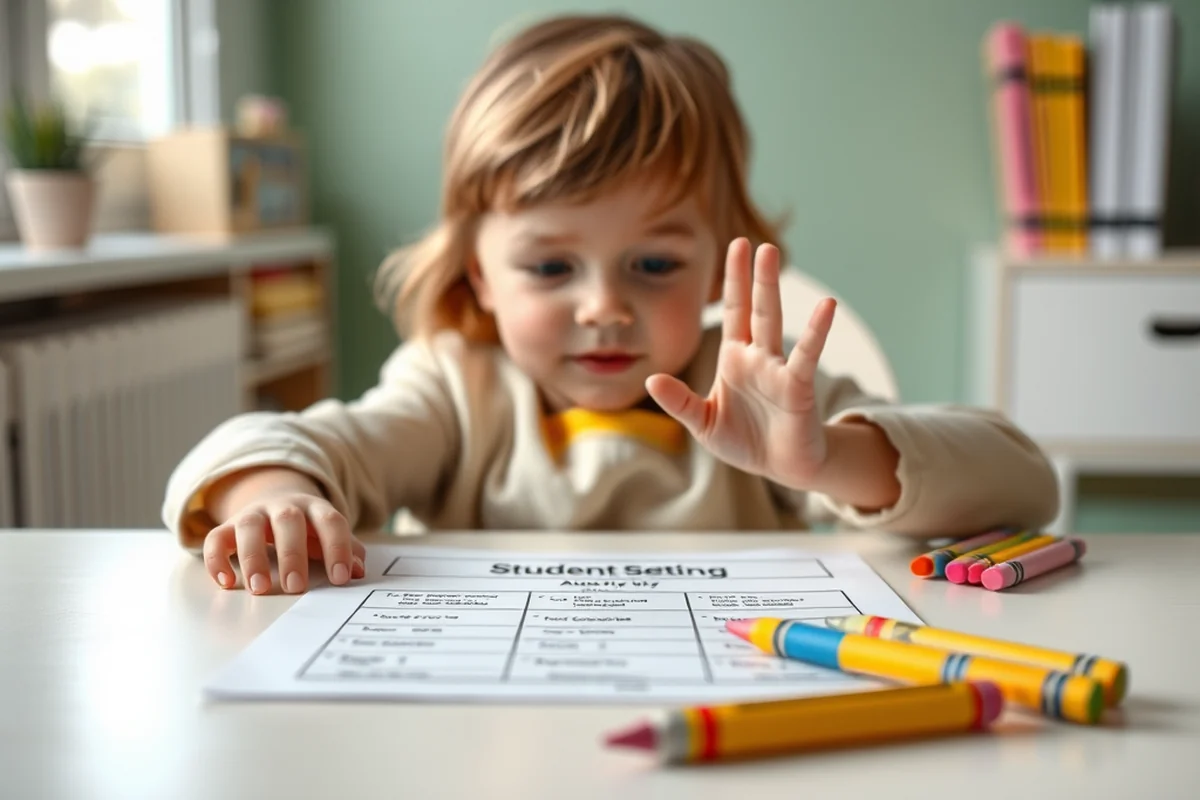
When comparing student goal setting examples, it's essential to consider how each method fosters motivation and clarity. For instance, visual progress charts work well with younger students who thrive on immediate feedback, but they may not be as effective for older kids who prefer more autonomy in tracking their goals.
Another key factor is adaptability. Some goal-setting methods, like SMART goals, can be easily tailored to a student’s individual needs, while others may be more rigid. For example, weekly reflection journals are highly adaptable but require consistent practice to become effective.
Finally, the impact on motivation and performance should be evaluated. I've observed that students who use a combination of goal-setting methods—such as SMART goals and visual tracking—tend to stay more engaged and achieve better results over time.
The best goal-setting strategy is one that works for the child, not the teacher.
Related: Student goal setting worksheet
Why Visual Goal Tracking Works for Younger Students
Visual goal tracking is a powerful tool for younger students because it turns abstract concepts into something they can see and interact with. I once had a student named Liam who struggled with staying focused during class. After introducing a sticker chart with a clear goal of earning 10 stickers by the end of the week, he became more engaged and eager to complete tasks.
This method is especially beneficial for children with attention issues or those who are still developing their executive functioning skills. Visual progress charts help them stay on track and provide a sense of accomplishment as they see their progress over time.
And visual tracking can be combined with a reward system to reinforce positive behavior. I've used this approach in both classroom and home settings, and it's been incredibly effective in motivating younger learners.
Pairing visual goal tracking with a reward system can greatly enhance a child's motivation and engagement.
“I still remember the first time I watched my daughter sit at her desk, pencil in hand, staring blankly at her schoolwork.”— Teaching Goal Setting to Kids editors
Related: Top student goal setting strategies
The Power of Weekly Reflection Journals

Weekly reflection journals are a simple yet powerful tool for students of all ages. I've used this method with students in grades 3 through 6, and it's helped them become more self-aware and reflective in their learning. Each week, students write down what they accomplished, what they struggled with, and what they can do differently next time.
This practice not only reinforces goal-setting habits but also builds metacognitive skills. Students begin to think critically about their learning and take ownership of their progress. I've seen students who used this method consistently improve in both academic performance and self-regulation.
One of the best parts of using reflection journals is that they allow for personalized growth. Each student's reflections are unique, and the insights they gain can guide their future goal-setting efforts.
Related: Best student goal setting examples
How to Use SMART Goals with Older Students
For older students, SMART goals can be a game-changer. Unlike younger children, who may benefit from more structured guidance, older students are often capable of setting their own goals with minimal support. I've used this approach with middle and high school students, and it's helped them take ownership of their learning in a meaningful way.
When teaching older students how to set SMART goals, it's important to provide examples and encourage them to think critically about what they want to achieve. For instance, a student might set a goal like 'I will complete all my math homework every day this week' instead of a vague statement like 'I want to do better in math.'
This method not only helps students stay focused but also teaches them how to set realistic and achievable goals. It's a skill that will benefit them throughout their academic and personal lives.
Related: Best student goal setting in kindergarten
The Role of Parent and Teacher Support in Goal Setting
No matter how well-structured a goal-setting method is, it's only as effective as the support the student receives. I've seen students who struggled with goal setting because they lacked consistent encouragement from parents or teachers. Without that support, even the best strategies can fall flat.
When parents and teachers provide regular check-ins, celebrate small victories, and offer constructive feedback, students are more likely to stay motivated and achieve their goals. I've used this approach in both classroom and home environments, and it's made a significant difference in student outcomes.
And involving parents in the goal-setting process can strengthen the connection between school and home. It creates a unified effort toward helping the child succeed.
The best goal-setting plan is only as strong as the support behind it.
Related: Best student goal setting strategies
How to Customize Goal-Setting Methods for Individual Students
Every student is different, and that means the most effective goal-setting strategy will vary from one child to another. I've worked with students who thrive on visual tracking, others who prefer written reflection, and some who benefit most from a combination of methods. Understanding each child's preferences and learning style is key to helping them succeed.
Customization also involves setting goals that are meaningful to the student. For example, a student who is passionate about art might be more motivated by a goal like 'I will complete 3 art projects this month' than a generic academic goal. It's important to align goals with the student's interests and strengths.
By tailoring goal-setting methods to each student's needs, educators and parents can create a more engaging and effective learning experience. This personalization helps students feel supported and empowered in their journey toward success.
🎨 Visual Tracking for Younger Kids
This method uses colorful charts and stickers to help younger students track their progress in a fun and engaging way.
🧠 SMART Goals for Older Students
This approach helps older students set clear, achievable goals that are specific, measurable, and time-bound.
📝 No-Prep Goal Setting
A simple, low-effort method that allows students to set goals without the need for additional materials or preparation.
👥 Group Goal Setting
This method encourages collaboration and peer support by having students set goals together and work toward them as a team.
📘 Reflection Journal Extension
A more advanced version of weekly reflection journals that includes deeper analysis and self-evaluation.
| The mistake | Why it happens | The fix |
|---|---|---|
| Setting vague or overly ambitious goals. | Vague goals like 'I want to be better at math' don't provide clear direction or measurable outcomes, which can lead to frustration and a lack of motivation. | Help your child set specific, achievable goals using the SMART framework. For example, 'I will complete 5 math problems every day this week.' |
| Not providing enough support or encouragement. | Without consistent support, students may lose motivation and struggle to stay on track with their goals. | Offer regular check-ins, celebrate small victories, and provide constructive feedback to keep your child motivated and engaged. |
| Forcing a one-size-fits-all approach. | Not all students have the same learning styles or preferences, so a method that works for one child may not work for another. | Customize goal-setting methods based on each student's needs and learning style. Some may benefit from visual tracking, while others may prefer written reflection. |
| Neglecting the importance of reflection. | Without reflection, students may not fully understand their progress or identify areas for improvement. | Encourage students to use weekly reflection journals to evaluate their goals and track their progress over time. |
Student Goal Setting Examples Comparison
Common Questions
What is the best goal-setting method for a 5-year-old?
How can I help my child set SMART goals?
What should I do if my child is struggling to stay motivated?
Can goal-setting methods be customized for individual students?
References
- Setting Conditions for Learning: Meta-Strategies for Differentiation (2009-2017.state.gov)
Cite this guide
Teaching Goal Setting to Kids (2026). Student Goal Setting Examples Comparison. https://playandachieve.com/student-goal-setting-examples-comparison/
Feel free to cite or share this guide.