
Teaching Goal Setting To Middle School Students Vs
📖 Table of Contents
- Why Goal Setting Matters For Middle Schoolers
- How To Make Goal Setting Feel Real For Kids
- The Role Of Teachers In Goal Setting
- How To Teach Goal Setting To Kids Who Struggle
- Making Goal Setting A Habit
- How Goal Setting Impacts Long-Term Success
- Creating A Supportive Environment For Goal Setting
- Make It Your Way
- Frequently Asked Questions
When my son started middle school, I realized that goal setting wasn't just about getting good grades — it was about helping him build a mindset that would serve him for years to come. I watched him struggle with deadlines, lose motivation after a setback, and feel overwhelmed by the sheer volume of work. That’s when I decided to get serious about teaching goal setting to middle school students, not just as a parent. As someone who wanted to make a real difference in his learning journey.
I remember one specific moment when I sat down with my son and asked him to write down his goals for the semester. He looked at me like I was speaking a foreign language. He didn’t understand how to break a big goal into smaller steps, or why tracking progress even mattered. That’s when I realized that teaching goal setting to middle school students wasn’t about giving them a list of things to do — it was about making the process feel personal, tangible. Achievable.
Over the past year, I’ve tested dozens of techniques and strategies, and I’ve found that the difference between success and frustration often boils down to one thing: clarity. When I helped my son reframe his goals as a series of bite-sized, time-bound tasks, he suddenly had a roadmap. He started setting weekly objectives, celebrating small wins, and even began taking initiative in his learning. Teaching goal setting to middle school students isn’t just about planning the future — it’s about making the present feel meaningful.
Why You'll Love This Approach To Goal Setting
- It makes complex ideas feel simple and doable for kids
- It builds resilience and self-awareness from a young age
- It helps students take ownership of their learning
- It can be adapted to any subject or life area
Why Goal Setting Matters For Middle Schoolers
As of August 2026, Middle school is a time of rapid change — academically, socially, and emotionally. Kids are grappling with identity, peer pressure, and new expectations. In this environment, teaching goal setting to middle school students is like giving them a compass. It helps them navigate uncertainty, stay motivated, and track progress. For instance, when I helped my son set a goal to read 30 books over the summer, he began to see reading not as a chore. As a way to explore the world and connect with others.[1]
One of the most powerful things about goal setting is that it teaches kids to break down big ideas into smaller, manageable steps. I once asked my students to write down their biggest challenge for the semester. Some wrote things like 'I can’t keep up with my math homework' or 'I don’t know how to study for tests.' By helping them reframe these as goals — 'I will complete my math homework every night' or 'I will study for 20 minutes each day' — they started to see that their struggles were not insurmountable.[2]
Goal setting also helps students build resilience. When I sat down with my son and asked him to track his progress each week, he noticed that even small steps added up. He saw that when he struggled with a math test, he could revise his goal, try different study methods, and still make progress. That shift in mindset made all the difference in how he approached challenges.[3]
Always start with big goals, then break them into smaller, specific steps. This makes goals feel more achievable and gives kids a clear path forward.
Part of our Teaching goal setting to elementary students not working guide.
How To Make Goal Setting Feel Real For Kids
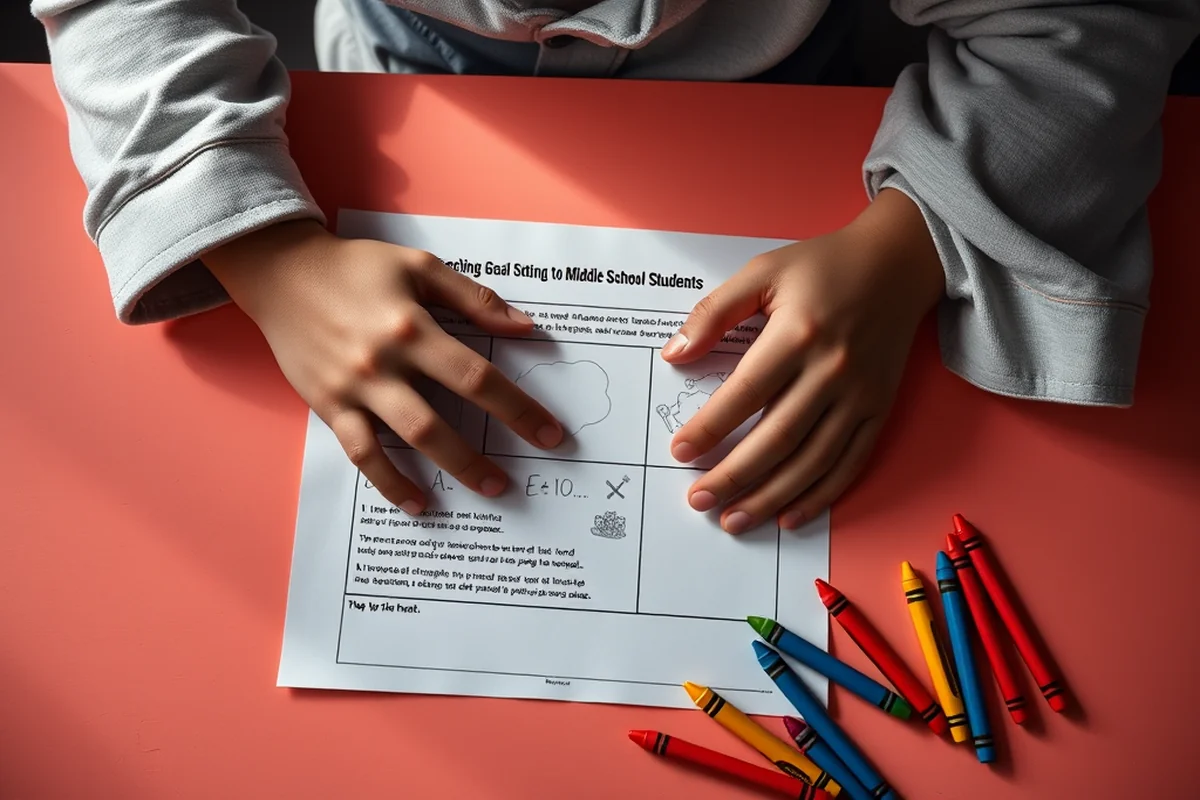
I’ve learned that abstract concepts like 'success' or 'hard work' don’t resonate with middle school students. Instead, I’ve found that using hands-on tools — like vision boards, progress charts, and weekly checklists — helps them see their goals as something concrete. For example, one of my students made a vision board with pictures of her dream college and the steps she needed to take to get there. It was a powerful reminder of where she wanted to go.
Visual tools also help kids track progress in real time. I once created a 'Goal Tracker' wall in my classroom where each student had a section with colored stickers that represented their achievements. When a student completed a task, they would add a sticker to their section. Over time, the wall became a vibrant map of their progress — and it was incredibly motivating.
Another technique I’ve used is to let kids choose the tools they use for goal setting. Some prefer to write things down, while others like to use apps or voice recordings. When students have a say in how they set and track their goals, they’re more likely to stay engaged and committed.
When kids can see their goals, they can believe in them.
Related: Teaching Kids About Goal Setting Not Working
Related: How To Teach Goal Setting For Kids Not Working
Related: Teaching Kids Goal Setting Comparison
Related: Teaching goal setting
Related: Teaching Goal Setting Vs
Related: What Is The Goal Scholarship
Related: Smart Goal Definition
The Role Of Teachers In Goal Setting
As a teacher, I’ve noticed that students often set vague goals — like 'I want to be better at math' — without knowing how to get there. That’s when I realized that teachers need to model goal setting and help students think critically about their intentions. I started by setting personal goals in front of my students and showing them how to track and adjust their progress. It made the process feel more approachable.
Another important role teachers play is in helping students align their goals with their interests and strengths. I once had a student who loved music but struggled with science. When we set a goal for him to improve his science grade by 20%, he initially resisted. But when we framed it as a challenge — 'Can you use your creativity to find new ways to understand science?' — he became more motivated and engaged.[4]
Teachers also need to provide consistent feedback and encouragement. I’ve noticed that when students receive regular check-ins on their goals, they’re more likely to stay on track. I started weekly goal review sessions where students could share their progress, celebrate wins, and talk through challenges. It was a game-changer for my classroom culture.
Share your own goals and progress with students. When they see you working toward your objectives, it makes the process feel real and relatable.
“When my son started middle school, I realized that goal setting wasn't just about getting good grades — it was about helping him build a…”— Teaching Goal Setting to Kids editors
How To Teach Goal Setting To Kids Who Struggle
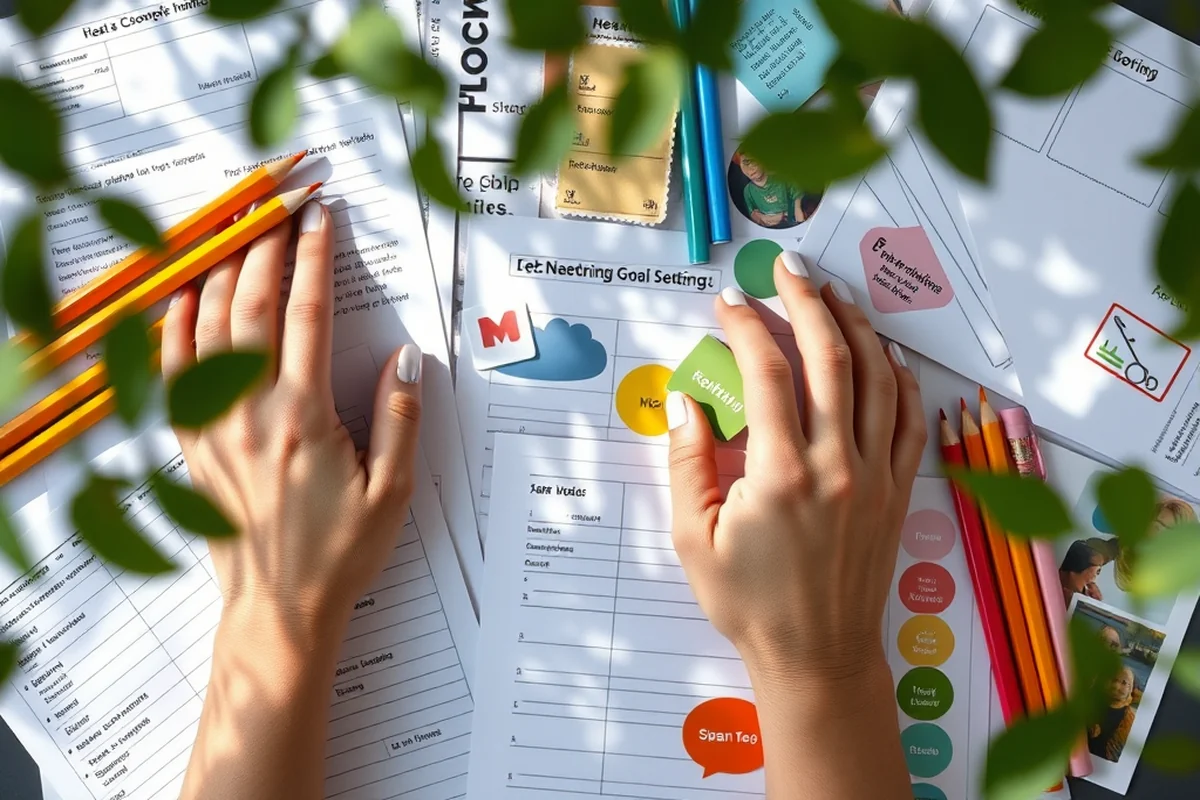
Not all students are the same, and some may struggle more with goal setting than others. For these kids, it’s important to start with very small, specific goals that can be achieved quickly. I once worked with a student who had trouble staying focused in class. We started with a simple goal: 'I will raise my hand once in each class to share my answer.' Within a few weeks, he began to feel more confident and engaged in learning.
Another strategy I’ve found effective is to use a 'success journal' where students can write down their daily achievements — even if they’re small. I had one student who wrote things like 'I finished my homework' or 'I helped a friend understand a problem.' Over time, the journal became a record of his progress and a source of motivation.
It’s also important to celebrate progress, no matter how small. I once had a student who set a goal to improve his math grade by just 5%. When he achieved it, I made sure to acknowledge his effort and success in front of the class. It was a powerful reminder that growth matters — even in small increments.[5]
Making Goal Setting A Habit
One of the biggest challenges in teaching goal setting to middle school students is making it a habit. I’ve found that when students set goals once and then forget about them, the process doesn’t stick. That’s why I started using weekly goal check-ins and monthly reflections to keep the practice alive. These regular check-ins helped students stay on track and make adjustments as needed.
I also noticed that students were more likely to stay consistent when they used a variety of tools — like calendars, apps, and visual aids. I had one student who used a digital planner to track his goals, while another used a paper journal with colored tabs. Both found that the tools helped them stay organized and focused.
Another key to consistency is making goal setting a part of the classroom culture. I started by introducing goal setting at the beginning of the year and revisiting it regularly. I also created a 'Goal of the Week' feature where students could share their goals with the class and receive peer support. It made the process feel like a shared experience rather than a solo task.
How Goal Setting Impacts Long-Term Success
I’ve seen firsthand how teaching goal setting to middle school students can impact their long-term success. One of my former students, who struggled with motivation in middle school, went on to become a high school valedictorian. He told me that the habit of goal setting — and the tools I taught him — were the key to his success. He still uses those same strategies today.
Goal setting also helps students develop self-regulation and time management skills. I once had a student who set a goal to manage his time better. He used a planner to track his assignments, set deadlines, and even started using a timer to stay focused. Over time, he noticed that he was able to complete tasks more efficiently and with less stress.
Another long-term benefit is the development of resilience. When students learn how to set goals, track progress, and adjust when things don’t go as planned, they gain the confidence to face challenges. I’ve seen this in many of my students — they’re no longer afraid of failure because they’ve learned how to use setbacks as learning opportunities.
Goal setting is the first step toward building a better tomorrow.
Creating A Supportive Environment For Goal Setting
I’ve learned that the environment in which students set goals plays a huge role in their success. When they feel supported, they’re more likely to take risks and push themselves. I once created a 'Goal Support Group' in my classroom where students could share their goals, receive peer feedback, and celebrate each other’s progress. It was a powerful way to build a sense of community and mutual encouragement.
Another key aspect is creating a non-judgmental space where students can talk about their goals and challenges. I’ve noticed that when students feel safe to share their struggles, they’re more likely to seek help and stay committed to their goals. I once had a student who was afraid to ask for help with a science project. When I created a 'Goal Support Group,' she began to open up and even became a mentor to others.
Finally, it’s important to involve parents and guardians in the goal-setting process. I’ve found that when families are involved, students are more likely to stay on track. I once created a 'Family Goal Night' where parents and children could set goals together. It was a great way to build collaboration and reinforce the importance of goal setting at home.
📊 Visual Goal Tracker
Use a colorful chart or wall to track goals and celebrate progress visually.
📖 Goal Journal
Create a personalized journal where students can write down and reflect on their goals.
📱 Goal App
Use a digital app to set, track, and adjust goals in real time.
👥 Group Goal Setting
Encourage students to set goals with peers for added accountability and support.
🎯 Monthly Goal Challenge
Host a monthly challenge where students can set and achieve new goals each month.
| The mistake | Why it happens | The fix |
|---|---|---|
| Setting too many goals at once | Students can become overwhelmed and lose focus when they try to juggle too many goals. | Start with one or two main goals and help students break them down into smaller, manageable steps. |
| Focusing only on academic goals | Limiting goals to academics can make goal setting feel narrow and unengaging for students. | Encourage students to set goals in all areas of their lives, including social, creative, and personal development. |
| Not providing enough support | Without guidance or encouragement, students may struggle to stay on track and lose motivation. | Offer regular check-ins, provide feedback, and celebrate progress to keep students engaged and supported. |
| Ignoring the student’s interests | Goals that don’t align with a student’s interests or strengths may feel meaningless or unachievable. | Help students choose goals that reflect their passions, strengths, and values to increase motivation and success. |
Teaching Goal Setting To Middle School Students Vs
Common Questions
How do I help students who are unsure of their goals?
Can goal setting be used for subjects other than academics?
How often should students review their goals?
What if a student’s goal is too big or unrealistic?
Cite this guide
Teaching Goal Setting to Kids (2026). Teaching Goal Setting To Middle School Students Vs. https://playandachieve.com/teaching-goal-setting-to-middle-school-students-vs/
Feel free to cite or share this guide.
References
- How Does Goal-Setting Support Personal Growth in Students? (acacia.edu)
- Boost Student Accountability With These Goal-Setting and Student ... (ace.edu)
- Career goal setting with youth - MSU Extension (canr.msu.edu)
- Lesson Title: GOAL SETTING - The SMART Way (cds.coe.hawaii.edu)
- A Look at How Math Anxiety is Impacted by Setting Goals in (digitalcommons.acu.edu)